
Long before borders, nations, or written history, the landscapes of Ethiopia were part of a story shared by all humanity. Across the Afar and Omo regions, fossils have preserved chapters of our deep past, helping scientists reconstruct how early human ancestors lived, moved, and changed.
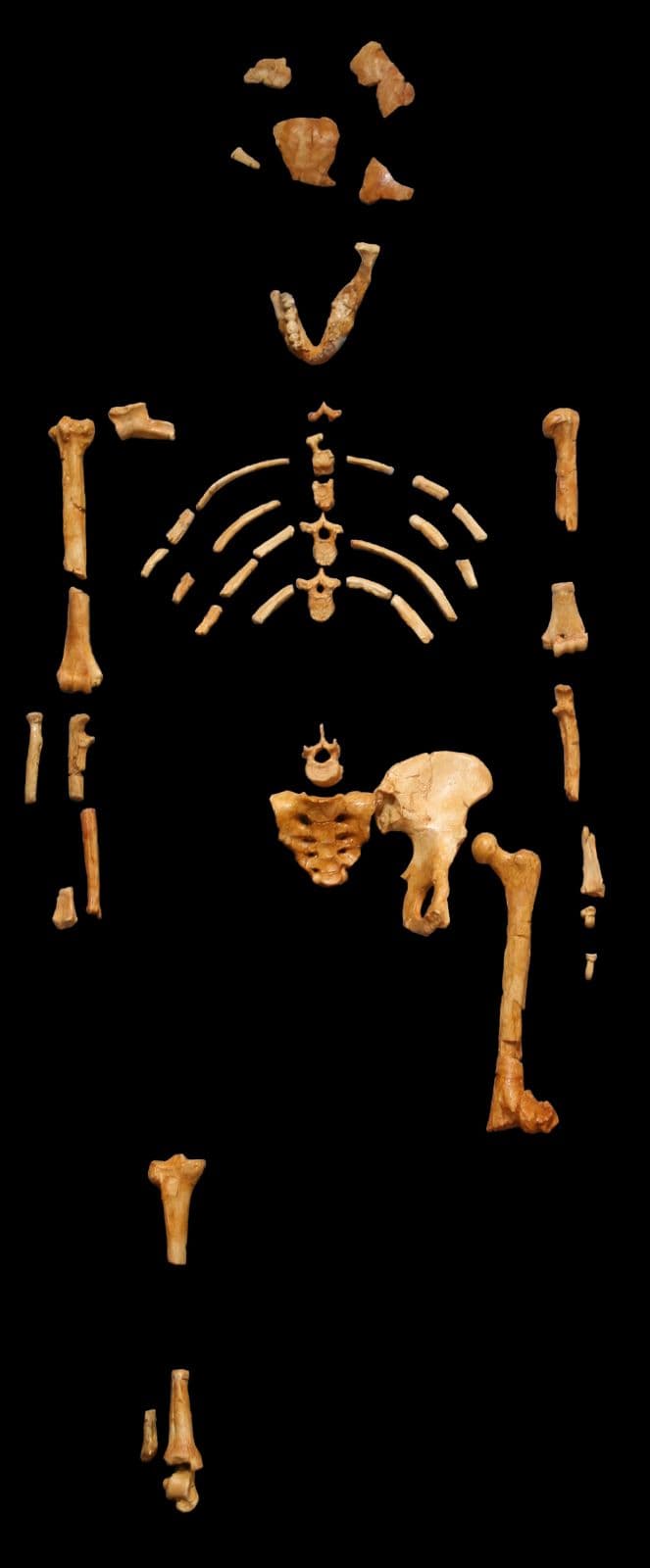
In 1974, Hadar gave the world Dinkinesh (Lucy), a 3.2-million-year-old Australopithecus afarensis whose skeleton, around 40% complete and among the most complete early hominin finds ever made, showed that upright walking had emerged long before our species. Twenty years later, nearby Aramis revealed Ardi, a 4.4-million-year-old Ardipithecus ramidus whose anatomy offered new clues about an even earlier stage of human evolution. Farther south, the Omo Valley preserves Omo I, one of the oldest known Homo sapiens fossils, now dated to at least about 233,000 years ago. Both the Awash and Omo valleys are inscribed on the UNESCO World Heritage List for this fossil record.
These discoveries do more than add names and dates to a timeline. They help science ask some of humanity’s oldest questions: Where did we come from? How did we begin to walk, adapt, and become who we are?
Ethiopia’s contribution to that story is not a claim of ownership, but an invitation to see our shared beginnings. Here, the ground itself has preserved evidence of a journey that belongs to us all, reminding us that before we became different peoples, we were part of the same human story.